 “Cannabinoids, active components of the plant Cannabis sativa, had been used for centuries in ancient medicine as therapeutic remedies for a variety of conditions, before becoming stigmatized due to their psychoactive effects.
In the second half of the 19th century, phyto-cannabinoids have been re-evaluated after the discovery of the chemical structure and isolation of different substances, and the subsequent development of cannabinoid-based drugs that have been FDA approved mainly to treat chemotherapy-induced nausea, insomnia and appetite, epilepsy, spasticity, and pain management.
Then, the elucidation of the endocannabinoid system, from the initial type 1 and type 2 (CB1 and CB2) cannabinoid receptors and their endogenous ligands (especially N-arachidonoylethanolamine, or anandamide, and 2-arachidonoylglycerol) to the emerging complexity of a wider system made up of additional putative receptors, ligands and enzymes, altogether termed endocannabinoidome, has further boosted research into the therapeutic potential of phyto-, endo- and even syntho-(synthetic) cannabinoids, cancer treatment included.”
 “The Endocannabinoid System (ECS) is primarily responsible for maintaining homeostasis, a balance in internal environment (temperature, mood, and immune system) and energy input and output in living, biological systems.
  “Cannabidiol (CBD), the major non-psychoactive compound found in cannabis, is frequently used both as a nutraceutical and therapeutic.
  “Clinical and preclinical evidence has indicated that estrogen depletion leads to memory impairments and increases the susceptibility to neural damage.
  “Persistent inflammation occurs in people with HIV (PWH) and has many downstream adverse effects including myocardial infarction, neurocognitive impairment and death.
 “In the study, we assessed the effect of hemp extract on activities of resistance parameters and the metabolic compound concentration in adult workers’ hemolymph. Bees were divided into the following groups: (1) control group fed with mixture of sugar and water-glycerine solution, (2) experimental group with pure sugar syrup and inside with cotton strips soaked with hemp extract, (3) experimental group with a mixture of sugar syrup with hemp extract. Hemp extracts caused an increase in the protein concentrations and reduced the protease activities regardless of the administration method. The protease inhibitor activities were decreased only in the group that received hemp extract on the strips. The biomarker activities (ALP, ALT, AST) increased from the control group and workers feeding extract in syrup and decreased in workers supplemented with the extract on strips. In young, 2-day-old workers, the glucose concentration was higher in the groups feeding with the extract than in the control. Hemp extract influenced an increase in urea concentrations in workers’ hemolymph in comparison with the control. The hemp supplementation positively influences the immune system of workers, and the appropriate method of administration may be adapted to the health problems of bees.”
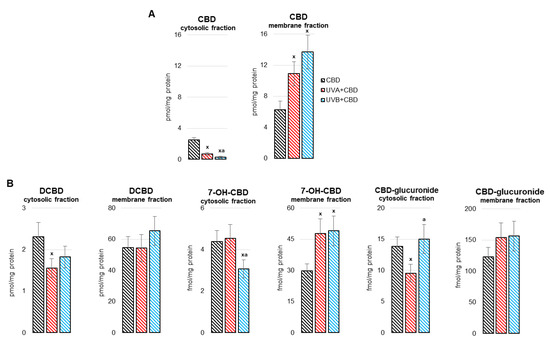
 “The liver is a key metabolic organ that is particularly sensitive to environmental factors, including UV radiation. As UV radiation induces oxidative stress and inflammation, natural compounds are under investigation as one method to counteract these consequences.