Cannabinoids in pain management: CB1, CB2 and non-classic receptor ligands.

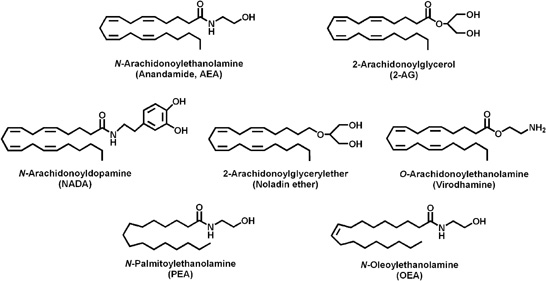
“The available commercial cannabinoids have a narrow therapeutic index. Recently developed peripherally restricted cannabinoids, regionally administered cannabinoids, bifunctional cannabinoid ligands and cannabinoid enzyme inhibitors, endocannabinoids, which do not interact with classic cannabinoid receptors (CB1r and CB2r), cannabinoid receptor antagonists and selective CB1r agonists hold promise as analgesics…

Expert opinion: Regional and peripherally restricted cannabinoids will reduce cannabinomimetic side effects. Spinal cannabinoids may increase the therapeutic index by limiting the dose necessary for response and minimize drugs exposure to supraspinal sites where cannabinomimetic side effects originate. Cannabinoid bifunctional ligands should be further explored. The combination of a CB2r agonist with a transient receptor potential vanilloid (TRPV-1) antagonist may improve the therapeutic index of the CB2r agonist. Enzyme inhibitors plus TRPV-1 blockers should be further explored. The development of analgesic tolerance with enzyme inhibitors and the pronociceptive effects of prostamides limit the benefits to cannabinoid hydrolyzing enzyme inhibitors.

Most clinically productive development of cannabinoids over the next 5 years will be in the area of selective CB2r agonists. These agents will be tested in various inflammatory, osteoarthritis and neuropathic pains.”

http://www.ncbi.nlm.nih.gov/pubmed/24836296

http://www.thctotalhealthcare.com/category/pain-2/

Prevention of Alzheimer’s Could Hinge on Marijuana Science

Alzheimers Disease includes reduced brain activity and function (red areas above), the result of years of accumulated damage. Molecules in pot seem to prevent this damage.

“The British Journal of Pharmacologyhas published a paper that concludes that the ingredients in marijuana likely work to prevent the onset of Alzheimer’s disease, Parkinson’s disease, Huntington’s disease, and age-related dementia.

Smoking, vaping, or eating the pot molecules THC and CBD directly effects nerve cell function, resulting in reduced chronic brain inflammation, reduced oxidative stress, and reduced cellular dysfunction — all the while promoting stability of the human body’s internal environment (homeostasis) and healthy brain cells (neurotrophic support)…

Pot likely prevents Alzheimer’s and other neurodegenerative diseases at the individual cell level. Molecules in pot like THC and CBD (called cannabinoids) plug into a primal, chemical signaling system in cells called “the endocannabinoid system.” Cannabinoids dampen inflammation, protect cells from oxidative damage, and promote cell health on a number of levels, the paper shows.

Manipulating the endocannabinoid system will likely be a key to preventing or curing a bunch of neurodegenerative disorders, the paper concludes.”

http://www.eastbayexpress.com/LegalizationNation/archives/2014/05/13/prevention-of-alzheimers-could-hinge-on-marijuana-science

“Prevention of Alzheimer’s Disease Pathology by Cannabinoids: Neuroprotection Mediated by Blockade of Microglial Activation”  http://www.jneurosci.org/content/25/8/1904.long

http://www.thctotalhealthcare.com/category/alzheimers-disease-ad/

The influence of cannabinoids on generic traits of neurodegeneration

“In an increasingly ageing population, the incidence of neurodegenerative disorders such as Alzheimer’s disease, Parkinson’s disease and Huntington’s disease are rising. While the aetiologies of these disorders are different, a number of common mechanisms that underlie their neurodegenerative components have been elucidated; namely neuroinflammation, excitotoxicity, mitochondrial dysfunction and reduced trophic support. Current therapies focus on treatment of the symptoms and attempt to delay the progression of these diseases but there is currently no cure.

Modulation of the endogenous cannabinoid system is emerging as a potentially viable option in the treatment of neurodegeneration. Endocannabinoid signalling has been found to be altered in many neurodegenerative disorders. To this end, pharmacological manipulation of the endogenous cannabinoid system, as well as application of phytocannabinoids and synthetic cannabinoids have been investigated. Signalling from the CB1 and CB2 receptors are known to be involved in the regulation of Ca2+ homeostasis, mitochondrial function, trophic support and inflammatory status, respectively, while other receptors gated by cannabinoids such as PPARγ, are gaining interest in their anti-inflammatory properties.

Through multiple lines of evidence, this evolutionarily conserved neurosignalling system has shown neuroprotective capabilities and is therefore a potential target for neurodegenerative disorders. This review details the mechanisms of neurodegeneration and highlights the beneficial effects of cannabinoid treatment.”

http://onlinelibrary.wiley.com/doi/10.1111/bph.12492/full

Mitochondria: A Possible Nexus for the Regulation of Energy Homeostasis by the Endocannabinoid System?

“The endocannabinoid system (ECS) regulates numerous cellular and physiological processes through the activation of receptors targeted by endogenously produced ligands called endocannabinoids. Importantly, this signalling system is known to play an important role in modulating energy balance and glucose homeostasis. For example, current evidence indicates that the ECS becomes overactive during obesity whereby its central and peripheral stimulation drives metabolic processes that mimic the metabolic syndrome. Herein, we examine the role of the ECS in modulating the function of mitochondria which play a pivotal role in maintaining cellular and systemic energy homeostasis, in large part due to their ability to tightly coordinate glucose and lipid utilisation. Because of this, mitochondrial dysfunction is often associated with peripheral insulin resistance and glucose intolerance, as well as the manifestation of excess lipid accumulation in the obese state. This review aims to highlight the different ways through which the ECS may impact upon mitochondrial abundance and/or oxidative capacity, and where possible, relate these findings to obesity-induced perturbations in metabolic function. Furthermore, we explore the potential implications of these findings in terms of the pathogenesis of metabolic disorders and how these may be used to strategically develop therapies targeting the ECS.”

http://www.ncbi.nlm.nih.gov/pubmed/24801388

http://www.thctotalhealthcare.com/category/obesity-2/

Towards a personalized treatment in depression: endocannabinoids, inflammation and stress response.

“The complex nature of depression is mirrored by difficulties in tailoring its treatment. Key underlying mechanisms of this mental disorder include elevated inflammation and a dysregulated hypothalamic-pituitary-adrenal (HPA) axis. More recently, the endocannabinoid system has been proposed as another important component in the pathogenesis of depression, and strong evidence suggests that all three systems communicate with each other. A growing number of genetic studies have investigated polymorphisms in depression in each of these systems separately. However, no study to date has looked at these genes in conjunction. In this article we will review the crosstalk between the endocannabinoid system, immune system and HPA axis; and discuss the evidence of gene polymorphisms and their relation to the risk of depression and its treatment. We propose future directions where genes of these three systems are considered from a joint perspective to improve prediction of treatment response, taking into account potentially overlooked genetic variations.”

http://www.ncbi.nlm.nih.gov/pubmed/24798725

http://www.thctotalhealthcare.com/category/depression-2/

Cannabinoid-induced autophagy regulates suppressor of cytokine signaling (SOCS)-3 in intestinal epithelium.

“Autophagy is a catabolic process involved in homeostatic and regulated cellular protein recycling and degradation via the lysosomal degradation pathway. Emerging data associates impaired autophagy, increased activity in the endocannabinoid system and upregulation of suppressor of cytokine signaling (SOCS)-3 protein expression during intestinal inflammatory states. We have investigated whether these three processes are linked. By assessing the impact of phyto-cannabinoid cannabidiol (CBD), synthetic cannabinoid (ACEA) and endocannabinoid (AEA) on autophagosome formation, we explored whether these actions were responsible for cyclic SOCS3 protein levels. Our findings show that all three cannabinoids induce autophagy in a dose-dependent manner in fully differentiated CaCo2 cells, a model of mature intestinal epithelium. ACEA and AEA induced canonical autophagy, which was cannabinoid receptor (CB)-1 mediated. In contrast, CBD was able to bypass both the CB1 receptor and the canonical pathway to induce autophagy, albeit to a lesser extent. Functionally, all three cannabinoids reduced SOCS3 protein expression, which was reversed by blocking both early and late autophagy. In conclusion, the regulatory protein, SOCS3, is itself regulated by autophagy and cannabinoids play a role in this process, which could be important when considering therapeutic applications for the cannabinoids in inflammatory conditions.”

http://www.ncbi.nlm.nih.gov/pubmed/24833710

Functionalization of β-Caryophyllene Generates Novel Polypharmacology in the Endocannabinoid System.

“The widespread dietary plant sesquiterpene hydrocarbon β-caryophyllene is a CB2 cannabinoid receptor-specific agonist showing anti-inflammatory and analgesic effects in vivo…

Our study shows that by removing the conformational constraints induced by the medium-sized ring and by introducing functional groups in the sesquiterpene hydrocarbon 1, a new scaffold with pronounced polypharmacological features within the endocannabinoid system could be generated.

The structural and functional repertoire of cannabimimetics and their yet poorly understood intrinsic promiscuity may be exploited to generate novel probes and ultimately more effective drugs.”

http://www.ncbi.nlm.nih.gov/pubmed/24831513

“Involvement of peripheral cannabinoid and opioid receptors in β-caryophyllene-induced antinociception…β-caryophyllene (BCP) is a common constitute of the essential oils of numerous spice, food plants and major component in Cannabis… The combined injection of morphine and BCP may be an alternative in treating chemogenic pain.” http://www.ncbi.nlm.nih.gov/pubmed/23138934

A new face of endocannabinoids in pharmacotherapy. Part I & II

“A new face of endocannabinoids in pharmacotherapy. Part I: Protective role of endocannabinoids in hypertension and myocardial infarction.

Cannabinoids are compounds which were first isolated from the Cannabis sativa plant. For thousands of years they have been used for treatment of numerous diseases.

Currently, synthetic cannabinoids and endocannabinoids are also known. Cannabinoid receptors, endocannabinoids and the enzymes that catalyze their synthesis and degradation constitute the endocannabinoid system which plays an important role in functioning of the cardiovascular system.

The results obtained to date suggest the involvement of endocannabinoids in the pathology of many cardiovascular diseases, including myocardial infarction, hypertension and hypotension associated with hemorrhagic, endotoxic, and cardiogenic shock. Cardioprotective effect and dilation of coronary vessels induced by endocannabinoids deserve special attention.

It cannot be excluded now that in the future our better understanding of cannabinoid system will allow to develop new strategies for treatment of cardiovascular diseases.”

http://www.jpp.krakow.pl/journal/archive/04_14/pdf/171_04_14_article.pdf

“A new face of endocannabinoids in pharmacotherapy. Part II. Role of endocannabinoids in inflammation-derived cardiovaascular diseases.

 Endocannabinoids play an important role in cardiovascular diseases caused by inflammatory disorders. Endocannabinoids are endogenous bioactive lipids that activate cannabinoid receptors and together with enzymes responsible for their synthesis and degradation constitute endocannabinoid system.

The results obtained to date suggest the involvement of endocannabinoids in the pathology of many cardiovascular diseases associated with inflammation, such as atherosclerosis, restenosis, chemotherapy-induced myocardial injury, diabetic and hepatic cirrhosis cardiomyopathy.

Our better understanding of cannabinoid system may result in the development of new strategies for the treatment of such disorders.”

http://www.jpp.krakow.pl/journal/archive/04_14/pdf/183_04_14_article.pdf

Cannabis, pain, and sleep: lessons from therapeutic clinical trials of Sativex, a cannabis-based medicine.

“Cannabis sativa L. has been utilized for treatment of pain and sleep disorders since ancient times.

This review examines modern studies on effects of Delta9-tetrahydrocannabinol (THC) and cannabidiol (CBD) on sleep. It goes on to report new information on the effects on sleep in the context of medical treatment of neuropathic pain and symptoms of multiple sclerosis, employing standardized oromucosal cannabis-based medicines containing primarily THC, CBD, or a 1 : 1 combination of the two (Sativex).

Sleep-laboratory results indicate a mild activating effect of CBD, and slight residual sedation with THC-predominant extracts. Experience to date with Sativex in numerous Phase I-III studies in 2000 subjects with 1000 patient years of exposure demonstrate marked improvement in subjective sleep parameters in patients with a wide variety of pain conditions including multiple sclerosis, peripheral neuropathic pain, intractable cancer pain, and rheumatoid arthritis, with an acceptable adverse event profile.

No tolerance to the benefit of Sativex on pain or sleep, nor need for dosage increases have been noted in safety extension studies of up to four years, wherein 40-50% of subjects attained good or very good sleep quality, a key source of disability in chronic pain syndromes that may contribute to patients’ quality of life.”

http://www.ncbi.nlm.nih.gov/pubmed/17712817

Miracle Drug: Medical Marijuana Cures Child of Terminal Epilepsy

Mia Wilkinson

“Only until recently has medical marijuana received its deserved accolades by the mainstream media as a miracle drug; however, many in the medical industry are still leaving pot on the back-burner….until NOW.

A Canadian mother named Sarah Wilkinson has tangible claims about how cannabis has saved her disabled and once terminally ill daughter’s life.”

During an interview with the Toronto Sun, Wilkinson said “I assumed people who wanted it just wanted to get high” prior to her daughter’s marijuana use. However, once administering marijuana to her daughter with no other options from the pharmaceutical industry, Mia’s seizures went from 100 a day to 8 at most, changing her stance about the drug overnight. Results upon using the herb were immediate. Mia’s seizures ended within 24 hours of using the herb and now the Wilkinson’s don’t hesitate to call the drug a miracle.”

http://www.prweb.com/releases/2014/05/prweb11808330.htm

“Medical marijuana gives epileptic child new lease on life”  http://www.torontosun.com/2014/04/26/medical-marijuana-gives-epileptic-child-new-lease-on-life

“Medical Marijuana Helps Epileptic Child Suffering 100 Seizures a Day”  http://www.ibtimes.co.uk/medical-marijuana-helps-epileptic-child-suffering-100-seizures-day-1446463

“Marijuana Miracle: Epileptic Child Who Suffered 100 Seizures Daily ‘Gets Cured’ After Using the Herb”  http://au.ibtimes.com/articles/549768/20140428/marijuana-miracle-health-benefits-epilepsy-child-seizure.htm#.U2JQLehX-uY

http://www.thctotalhealthcare.com/category/epilepsy-2/