
 “There is not a single pharmacological agent with demonstrated therapeutic efficacy for traumatic brain injury (TBI). With recent legalization efforts and the growing popularity of medical cannabis, patients with TBI will inevitably consider medical cannabis as a treatment option.
Preclinical TBI research suggests cannabinoids have neuroprotective and psychotherapeutic properties.
Our review identified a paucity of high-quality studies examining the beneficial and adverse effects of medical cannabis on traumatic brain injury, with only a single Phase III randomized control trial. However, observational studies demonstrate that TBI patients are using medical and recreational cannabis to treat their symptoms, highlighting inconsistencies between public policy, perception of potential efficacy, and the dearth of empirical evidence.
We conclude that randomized controlled trials and prospective studies with appropriate control groups are necessary to fully understand the efficacy and potential adverse effects of medical cannabis for TBI.”
 “The prevalence of mild traumatic brain injury is highest amongst the adolescent population and can lead to complications including neuroinflammation and excitotoxicity.
 “Neurological disorders such as neurodegenerative diseases or traumatic brain injury are associated with cognitive, motor and behavioural changes that influence the quality of life of the patients. Although different therapeutic strategies have been developed and tried until now to decrease the neurological decline, no treatment has been found to cure these pathologies.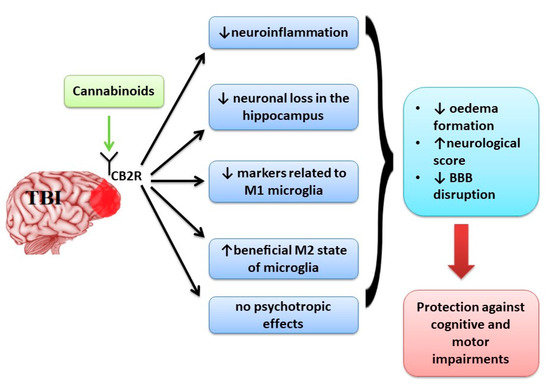
 “Recently, several studies have reported that the pharmacological effects exerted by
  “In the sports domain, cannabis is prohibited by the World Anti-Doping Agency (WADA) across all sports in competition since 2004. The few studies on physical exercise and cannabis focused on the main compound i.e. Δ9-tetrahydrocannabinol.
  “To determine whether adjunctive dronabinol, a licensed form of delta-9-tetrahydrocannabinol, reduces opioid consumption when used off-label for managing acute pain following traumatic injury.
 “Brain trauma was clinically associated with increased osteogenesis in the appendicular skeleton. We showed previously in C57BL/6J mice that mild traumatic brain injury (mTBI) transiently induced bone formation in the femur via the
 “Cannabidiol (CBD), a non-euphorigenic compound derived from