
 “Cannabis has been used as a medicine for millennia. Prohibition in the mid-20th century precluded early scientific investigation.
‘Cannabis’ describes three separate forms – herbal cannabis, ‘hemp’ products, pharmaceutical-grade regulated cannabinoid-based medical products (CBMP).
The endocannabinoid system (ECS), delineated in the late 1990s, has increased the understanding and interest in research for appropriate clinical indications. The ubiquitous ECS has homeostatic and anti-inflammatory effects and comprises cannabinoid receptors, endocannabinoids and degrading enzymes.
Phytocannabinoids are partial agonists of the ECS. In pre-clinical studies, THC and CBD produce beneficial effects in chronic pain, anxiety, sleep and inflammation. Systematic reviews often conflate herbal cannabis and CBMP, confusing the evidence. Currently large randomised controlled trials are unlikely to be achieved. Other methodologies with quality end-points are required. Rich, valuable high-quality real-world evidence for the safe and effective use of CBMP provides an opportunity to examine benefits and potential harms.
Evidence demonstrates benefit of CBMP in multiple sclerosis, chronic neuropathic pain, chemotherapy induced nausea and vomiting, resistant paediatric epilepsy, anxiety and insomnia. CBMP are well tolerated with few serious adverse events. Additional clinical benefits are promising in many other resistant chronic conditions. Pharmaceutical grade prescribed CBMP has proven clinical benefits and provides another clinical option in the physician’s pharmacopeia.”
https://pubmed.ncbi.nlm.nih.gov/33215831/
“Medical use of cannabis has been practiced for millennia and pre‐dates recorded human history.”
 “A large number of cannabinoids have been discovered that could play a role in mitigating cardiac affections. However, none of them has been as widely studied as cannabidiol (CBD), most likely because, individually, the others offer only partial effects or can activate potential harmful pathways.
 “The endocannabinoid (eCB) system encompasses the eCBs anandamide and 2-arachidonoylglycerol, their anabolic/catabolic enzymes, and the cannabinoid CB1 and CB2 receptors. Its expansion to include several eCB-like lipid mediators, their metabolic enzymes, and their molecular targets, forms the endocannabinoidome (eCBome).
 “The endocannabinoid system (ECS) is natural physiological system in the humans. The presence of the ECS system involves different roles in body. The endocannabinoid system involves regulation of most of the centers, which regulates the hunger and leads to changes in the weight.
 “The cannabinoid receptor subtype 2 (CB2R) represents an interesting and new therapeutic target for its involvement in the first steps of neurodegeneration as well as in cancer onset and progression.
 “Uterus transplantation is a complex surgical procedure. Uterine ischemia/reperfusion (IR) damage occurring in this process may cause loss of function in the uterus. Cell damage must be prevented for a healthy uterine function and successful transplantation.
 “This article provides a concise overview of how cannabinoids and the endocannabinoid system (ECS) have significant implications for the prevention and treatment of metabolic syndrome (MetS) and for the treatment of cardiovascular disorders, including cardiac fibrosis.
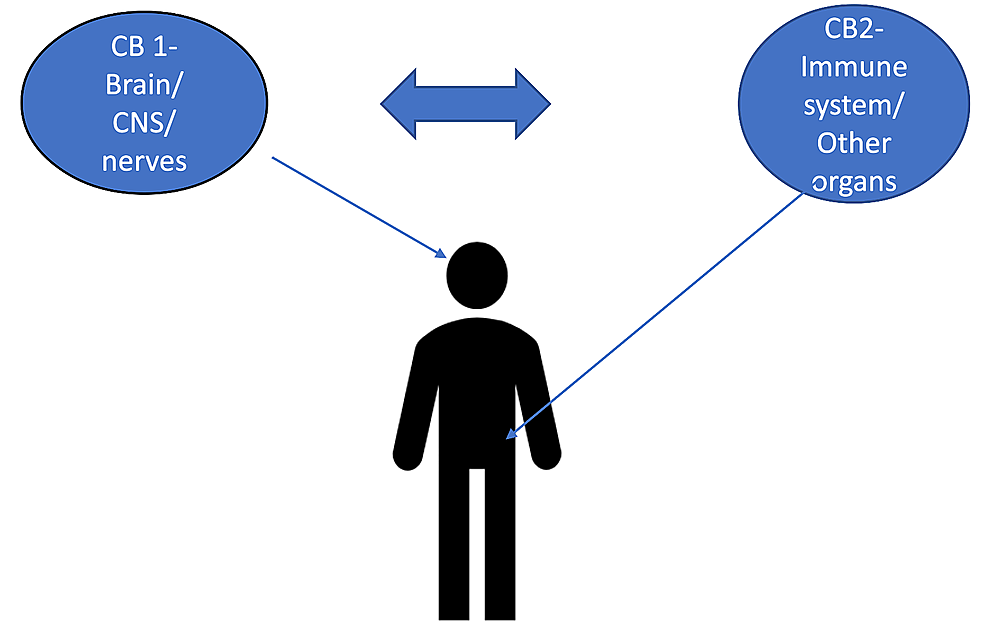 “The burden of chronic pain has affected many individuals leading to distress and discomfort, alongside numerous side effects with conventional therapeutic approaches.
 “The identification of the human cannabinoid receptors and their roles in health and disease, has been one of the most significant biochemical and pharmacological advancements to have occurred in the past few decades. In spite of the major strides made in furthering endocannabinoid research, therapeutic exploitation of the endocannabinoid system has often been a challenging task.