The effects of cannabidiol on the antigen-induced contraction of airways smooth muscle in the guinea-pig.

“(-)-Δ(9)-Tetrahydrocannabinol has been demonstrated to have beneficial effects in the airways, but its psychoactive effects preclude its therapeutic use for the treatment of airways diseases. In the present study we have investigated the effects of (-)-cannabidiol, a non-psychoactive component of cannabis for its actions on bronchial smooth muscle in vitro and in vivo.

 Guinea-pig bronchial smooth muscle contractions induced by exogenously applied spasmogens were measured isometrically. In addition, contractile responses of bronchial smooth muscle from ovalbumin-sensitized guinea-pigs were investigated in the absence or presence of (-)-cannabidiol. Furthermore, the effect of (-)-cannabidiol against ovalbumin-induced airway obstruction was investigated in vivo in ovalbumin-sensitized guinea pigs. (-)-Cannabidiol did not influence the bronchial smooth muscle contraction induced by carbachol, histamine or neurokinin A. In contrast, (-)-cannabidiol inhibited anandamide- and virodhamine-induced responses of isolated bronchi. A fatty acid amide hydrolase inhibitor, phenylmethanesulfonyl fluoride reversed the inhibitory effect of (-)-cannabidiol on anandamide-induced contractions. In addition, (-)-cannabidiol inhibited the contractile response of bronchi obtained from allergic guinea-pigs induced by ovalbumin. In vivo, (-)-cannabidiol reduced ovalbumin-induced airway obstruction.

 In conclusion, our results suggest that cannabidiol can influence antigen-induced airway smooth muscle tone suggesting that this molecule may have beneficial effects in the treatment of obstructive airway disorders.”
http://www.ncbi.nlm.nih.gov/pubmed/23428645

The trypanocidal effect of Cannabis sativa constituents in experimental animal trypanosomiasis.

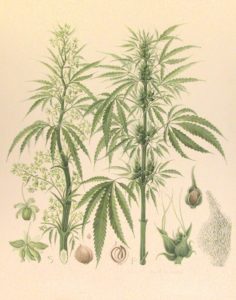
Image result for cannabis sativa

“The effect of Cannabis sativa on trypanosome-infected rats was examined. An aqueous extract of the seeds administered at a dose of 50 mg/kg/d cured animals infected with Trypanosome brucei brucei of blood stream parasites.

Six fractions eluted from the crude extract by column chromatography were assessed for trypanocidal properties. Of these, only 2 fractions retained trypanocidal activity by curing mice infected with T brucei brucei.”

http://www.ncbi.nlm.nih.gov/pubmed/7900270

Related image

“Trypanosoma brucei is a species of parasitic kinetoplastid belonging to the genus Trypanosoma. The parasite is the cause of a vector-borne disease of vertebrate animals, including humans, carried by genera of tsetse fly in sub-Saharan Africa. In humans T. brucei causes African trypanosomiasis, or sleeping sickness.”  https://en.wikipedia.org/wiki/Trypanosoma_brucei

“A trypanocidal agent is an antiprotozoal agent that acts upon trypanosome parasites.”  https://en.wikipedia.org/wiki/Trypanocidal_agent

Activation of the CB(2) receptor system reverses amyloid-induced memory deficiency.

“Cannabinoid type 2 (CB(2)) agonists are neuroprotective and appear to play modulatory roles in neurodegenerative processes in Alzheimer’s disease. We have studied the effect of 1-((3-benzyl-3-methyl-2,3-dihydro-1-benzofuran-6-yl) carbonyl) piperidine (MDA7)-a novel selective CB(2) agonist that lacks psychoactivity-on ameliorating the neuroinflammatory process, synaptic dysfunction, and cognitive impairment 

 Our findings suggest that MDA7 is an innovative therapeutic approach for the treatment of Alzheimer’s disease.”

http://www.ncbi.nlm.nih.gov/pubmed/22795792

The role of the immune system in clearance of Abeta from the brain.

“In Alzheimer’s disease (AD), there is abnormal accumulation of Abeta and tau proteins in the brain. There is an associated immunological response, but it is still unclear whether this is beneficial or harmful. Inflammation in AD, specifically in the form of microglial activation, has, for many years, been considered to contribute to disease progression. However, two types of evidence suggest that it may be appropriate to revise this view: first, the disappointing results of prospective clinical trials of anti-inflammatory agents and, second, the observation that microglia can clear plaques in AD following Abeta immunization. Although Abeta immunization alters AD pathology, there is limited evidence so far of benefit to cognitive function. Immunization against microorganisms is almost always used as a method of disease prevention rather than to treat a disease process that has already started. In animal models, immunotherapy at an early age can protect against Abeta accumulation and it will be interesting to see if this can usefully be applied to humans to prevent AD.”

http://www.ncbi.nlm.nih.gov/pubmed/18363937

The neuroprotective effect of cannabidiol in an in vitro model of newborn hypoxic-ischemic brain damage in mice is mediated by CB(2) and adenosine receptors.

Abstract

“To investigate the mechanisms involved in cannabidiol (CBD)-induced neuroprotection in hypoxic-ischemic (HI) immature brain, forebrain slices from newborn mice underwent oxygen and glucose deprivation in the presence of vehicle, or CBD alone or with selective antagonists of cannabinoid CB(1) and CB(2), and adenosine A(1) and A(2) receptors. CBD reduced acute (LDH efflux to the incubation medium) and apoptotic (caspase-9 concentration in tissue) HI brain damage by reducing glutamate and IL-6 concentration, and TNFalpha, COX-2, and iNOS expression. CBD effects were reversed by the CB(2) antagonist AM630 and by the A(2A) antagonist SCH58261. The A(1A) antagonist DPCPX only counteracted the CBD reduction of glutamate release, while the CB(1) antagonist SR141716 did not modify any effect of CBD. In conclusion, CBD induces robust neuroprotection in immature brain, by acting on some of the major mechanisms underlying HI cell death; these effects are mediated by CB(2) and adenosine, mainly A(2A), receptors.”

http://www.ncbi.nlm.nih.gov/pubmed/19900555

Neuroprotective antioxidants from marijuana.

“Cannabidiol and other cannabinoids were examined as neuroprotectants in rat cortical neuron cultures exposed to toxic levels of the neurotransmitter, glutamate.

The psychotropic cannabinoid receptor agonist delta 9-tetrahydrocannabinol (THC) and cannabidiol, (a non-psychoactive constituent of marijuana), both reduced NMDA, AMPA and kainate receptor mediated neurotoxicities.

Neuroprotection was not affected by cannabinoid receptor antagonist, indicating a (cannabinoid) receptor-independent mechanism of action. Glutamate toxicity can be reduced by antioxidants. Using cyclic voltametry and a fenton reaction based system,

it was demonstrated that Cannabidiol, THC and other cannabinoids are potent antioxidants. As evidence that cannabinoids can act as an antioxidants in neuronal cultures,

 cannabidiol was demonstrated to reduce hydroperoxide toxicity in neurons.

In a head to head trial of the abilities of various antioxidants to prevent glutamate toxicity, cannabidiol was superior to both alpha-tocopherol and ascorbate in protective capacity.

Recent preliminary studies in a rat model of focal cerebral ischemia suggest that cannabidiol may be at least as effective in vivo as seen in these in vitro studies.”

http://www.ncbi.nlm.nih.gov/pubmed/10863546

Role of cannabinoids in the regulation of bone remodeling

Abstract

“The endocannabinoid system plays a key role in regulating a variety of physiological processes such as appetite control and energy balance, pain perception, and immune responses. Recent studies have implicated the endocannabinoid system in the regulation of bone cell activity and bone remodeling. These studies showed that endogenous cannabinoid ligands, cannabinoid receptors, and the enzymes responsible for ligand synthesis and breakdown all play important roles in bone mass and in the regulation of bone disease. These findings suggest that the endocannabinoid pathway could be of value as a therapeutic target for the prevention and treatment of bone diseases. Here, we review the role of the skeletal endocannabinoid system in the regulation of bone remodeling in health and disease.”

http://www.ncbi.nlm.nih.gov/pubmed/23181053

Cannabinoids as pharmacotherapies for neuropathic pain: from the bench to the bedside.

“Neuropathic pain is a debilitating form of chronic pain resulting from nerve injury, disease states, or toxic insults. Neuropathic pain is often refractory to conventional pharmacotherapies, necessitating validation of novel analgesics. Cannabinoids, drugs that share the same target as Delta(9)-tetrahydrocannabinol (Delta(9)-THC), the psychoactive ingredient in cannabis, have the potential to address this unmet need…

In humans, effects of smoked marijuana, synthetic Delta(9)-THC analogs (e.g., Marinol, Cesamet) and medicinal cannabis preparations containing both Delta(9)-THC and cannabidiol (e.g., Sativex, Cannador) in neuropathic pain states are reviewed. Clinical studies largely affirm that neuropathic pain patients derive benefits from cannabinoid treatment…

Evidence for the use of Cannabis sativa as a treatment for pain can be traced back to the beginnings of recorded history…

 http://www.ncbi.nlm.nih.gov/pmc/articles/PMC2755639/

Therapeutic potential of the endocannabinoid system in the brain.

Abstract

“Cannabinoids have been predominantly considered as the substances responsible of the psychoactive properties of marijuana and other derivatives of Cannabis sativa. However, these compounds are now being also considered for their therapeutic potential, since the term “cannabinoid” includes much more compounds than those present in Cannabis sativa derivatives. Among them, there are numerous synthetic cannabinoids obtained by modifications from plant-derived cannabinoids, but also from the compounds that behave as endogenous ligands for the different cannabinoid receptor subtypes. Within the family of “cannabinoid-related compounds”, one should also include some prototypes of selective antagonists for these receptors, and also the recently developed inhibitors of the mechanism of finalization of the biological action of endocannabinoids (transporter + FAAH). All this boom of the cannabinoid pharmacology has, therefore, an explanation in the recent discovery and characterization of the endocannabinoid signaling system, which plays a modulatory role mainly in the brain but also in the periphery. The objective of the present article will be to review, from pharmacological and biochemical points of view, the more recent advances in the study of the endocannabinoid system and their functions in the brain, as well as their alterations in a variety of pathologies and the proposed therapeutic benefits of novel cannabinoid-related compounds that improve the pharmacokinetic and pharmacodynamic properties of classic cannabinoids.”

http://www.ncbi.nlm.nih.gov/pubmed/16026307

Antagonism of the cannabinoid CB-1 receptor protects rat liver against ischaemia-reperfusion injury complicated by endotoxaemia.

  “Endotoxaemia can complicate hepatic ischaemia-reperfusion (IR) injury. Endocannabinoids appear to modulate the haemodynamic alterations and cytokine response induced by lipopolysaccharide (LPS). Thus, we aimed to determine the effect of the endocannabinoid CB1-receptor antagonist Rimonabant in a model of hepatic IR injury complicated by endotoxaemia.”

“Liver injury and neutrophil infiltration occurring in the late-phase of LPS-enhanced IR were significantly reduced by CB1-receptor antagonism.”

“CONCLUSIONS:

This study demonstrates that CB1-receptor antagonism protects the liver against LPS-enhanced IR injury by interfering with the inflammatory response that causes the late, neutrophil-dependent phase of reperfusion injury, although the prevention of the transient endotoxin-related hypotension occurring early during reperfusion may be also involved.”

http://www.ncbi.nlm.nih.gov/pubmed/19282305