
 “Despite the multiple preventive measures and treatment options, colorectal cancer holds a significant place in the world’s disease and mortality rates. The development of novel therapy is in critical need, and based on recent experimental data, cannabinoids could become excellent candidates. This review covered known experimental studies regarding the effects of cannabinoids on intestinal inflammation and colorectal cancer. In our opinion, because colorectal cancer is a heterogeneous disease with different genomic landscapes, the choice of cannabinoids for tumor prevention and treatment depends on the type of the disease, its etiology, driver mutations, and the expression levels of cannabinoid receptors. In this review, we describe the molecular changes of the endocannabinoid system in the pathologies of the large intestine, focusing on inflammation and cancer.”
“In recent years, multiple preclinical studies have shown that changes in endocannabinoid system signaling may have various effects on intestinal inflammation and colorectal cancer. However, not all tumors can respond to cannabinoid therapy in the same manner. Given that colorectal cancer is a heterogeneous disease with different genomic landscapes, experiments with cannabinoids should involve different molecular subtypes, emerging mutations, and various stages of the disease. We hope that this review can help researchers form a comprehensive understanding of cannabinoid interactions in colorectal cancer and intestinal bowel diseases. We believe that selecting a particular experimental model based on the disease’s genetic landscape is a crucial step in the drug discovery, which eventually may tremendously benefit patient’s treatment outcomes and bring us one step closer to individualized medicine.”
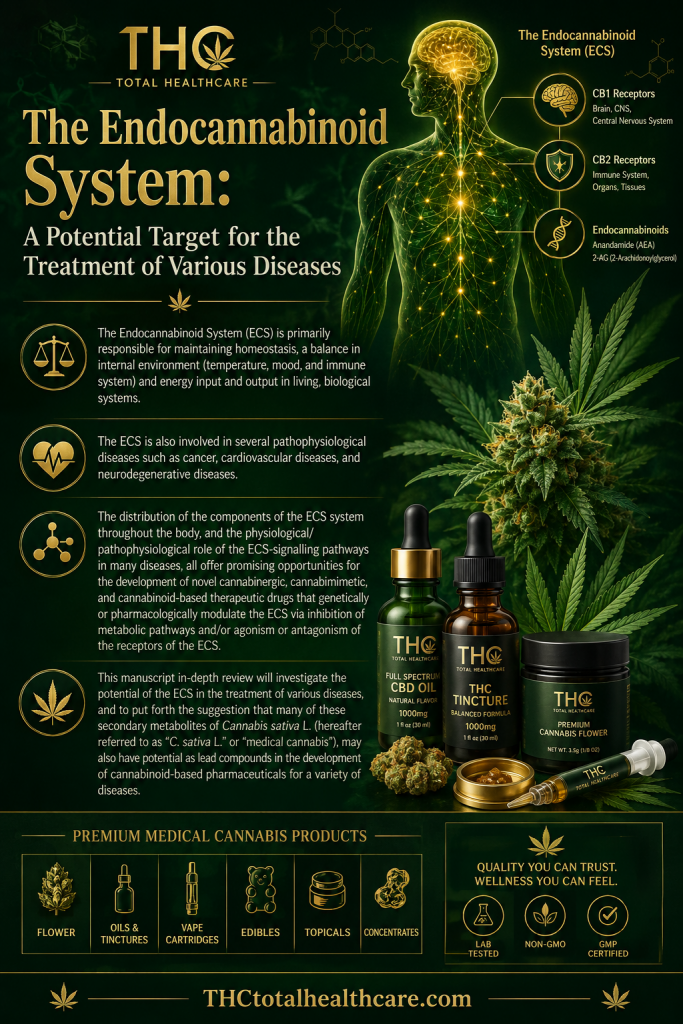
 “The Endocannabinoid System (ECS) is primarily responsible for maintaining homeostasis, a balance in internal environment (temperature, mood, and immune system) and energy input and output in living, biological systems.
 “Cannabis sativa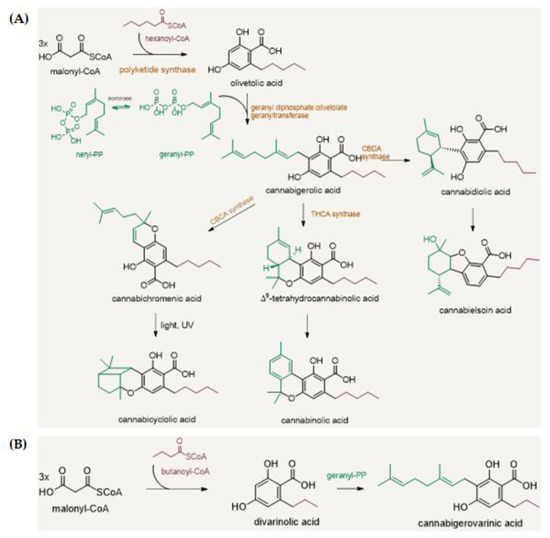
 “Colorectal cancer (CRC) is between the top three occurring cancers worldwide. The anticancer effects of Cannabinoid receptor 2 (CB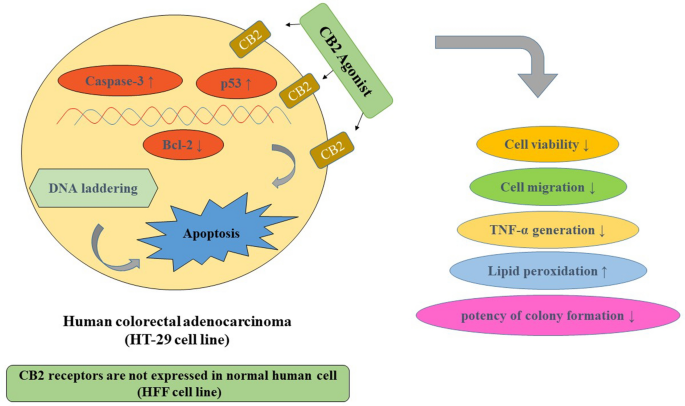
 “Cannabis sativa
 “Cannabis has long been used for healing and recreation in several regions of the world. Over 400 bioactive constituents, including more than 100 phytocannabinoids, have been isolated from this plant. The non-psychoactive cannabidiol (CBD) and the psychoactive Δ9-tetrahydrocannabinol (Δ9-THC) are the major and widely studied constituents from this plant.
 “Providers need to be better equipped to discuss medical cannabis with patients even if they are not willing to prescribe it. The oncology community would be well served to ensure that providers are aware of existing cannabis research and are able to incorporate it into their communications with patients instead of leaving patients to figure out medical cannabis on their own.”

 “Multidrug resistance (MDR) to known chemotherapeutic agents is increasing while the development of new drugs is lacking behind. Combination therapies might increase the development of effective treatment.