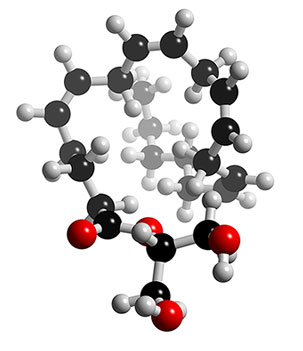
Hippies Vindicated: Human-produced Cannabinoids Have Anti-inflammatory Powers

“Extracts of the hemp plant cannabis are traditionally used as a popular remedy against inflammation. At the beginning of the last century this natural remedy was even available at every chemist’s. But due to the intoxicating effect of the component THC (tetrahydrocannabinol) the plant was taken off the chemist’s shelves in the 1930s.”

“Scientists from the University of Bonn have discovered in experiments with mice that Endocannabinoids play an important role in regulating inflammation processes. In their animal experiments, a solution with an important component made from cannabis reduced allergic reactions of the skin.”

 “When inflammation occurs the endocannabinoids act like someone stepping on the brakes. They prevent the body from doing too much of a good thing and the immune reaction from getting out of control. This is consistent with the fact that at the beginning of the infection the endocannabinoid concentration increased in the mice. ‘Apart from that there are strains of mice in which the breakdown of these active substances produced by the body is malfunction-ing,’ Evelyn Gaffal says. ‘They have an increased endocannabinoid concen-tration in their skin. In our experiments these animals also showed a less marked allergic reaction.'”

“The results open up new options for the treatment of skin allergies and inflammation. Firstly, drugs which prevent the breakdown of endocannabin-oids look promising. But the old household remedy cannabis could also make a comeback as an ointment. In the experiment on mice this approach has already been successful. ‘If we dabbed THC solution on to the animals’ skin shortly before and after applying the allergen, a lot less swelling occurred than normal,’ Professor Thomas Tüting explains. ‘THC attaches itself to cannabin-oid receptors and activates them. In this way the active substance reduces the allergic reaction.’ Incidentally, ointment like this would probably not have an intoxicating effect, for this the amount of THC contained would be much too small.”

http://www.science20.com//news/marijuana_benefit_also_human_produced_cannabinoids_have_anti_inflammatory_powers?fb_action_ids=459596310743682&fb_action_types=og.likes&fb_source=aggregation&fb_aggregation_id=288381481237582


Cannabidiol, extracted from Cannabis sativa, selectively inhibits inflammatory hypermotility in mice

 “Cannabidiol is a Cannabis-derived non-psychotropic compound that exerts a plethora of pharmacological actions, including anti-inflammatory, neuroprotective and antitumour effects, with potential therapeutic interest. However, the actions of cannabidiol in the digestive tract are largely unexplored. In the present study, we investigated the effect of cannabidiol on intestinal motility in normal (control) mice and in mice with intestinal inflammation.”

“Cannabidiol selectively reduces croton oil-induced hypermotility in mice in vivo and this effect involves cannabinoid CB1 receptors and FAAH. In view of its low toxicity in humans, cannabidiol may represent a good candidate to normalize motility in patients with inflammatory bowel disease.”

“The plant Cannabis sativa contains more than 60 terpenophenolic compounds, named phytocannabinoids. The best-studied phytocannabinoid is Δ9-tetrahydrocannabinol, which binds specific G-protein-coupled receptors, named cannabinoid (CB1 and CB2) receptors. The well-known psychotropic effects of Δ9-tetrahydrocannabinol, which are largely mediated by activation of brain cannabinoid CB1 receptors, have always raised a number of clinical and ethical problems. Therefore, a valid therapeutic alternative may be the use of non-psychotropic phytocannabinoids, including cannabidiol (CBD). CBD, unlike Δ9-tetrahydrocannabinol, has very low affinity for both cannabinoid CB1 and CB2 receptors, although it has been proposed that CBD may modulate endocannabinoid function through its ability to inhibit the hydrolysis of anandamide and to act as a transient receptor potential vanilloid 1 agonist. CBD is a major component of Sativex, a preparation of cannabinoids, which has been approved by Health Canada for the treatment of neuropathic pain in multiple sclerosis.”

“The pharmacological profile of CBD has been recently reviewed. Briefly stated, CBD has been shown to exert (1) antioxidant, neuroprotective and antiproliferative actions in cultured cells and (2) anti-anxiety, hypnotic, anticonvulsant, neuroprotective, antinausea, anti-ischaemic, anticancer and notably anti-inflammatory effects in rodents in vivo. The anti-inflammatory effects of CBD have been demonstrated in both acute and chronic experimental models of inflammation, that is, paw oedema and arthritis.”

“In conclusion, we have shown that the marijuana component CBD normalize intestinal motility in an experimental model of ileitis. In vitro results showed antispasmodic actions of CBD on intestinal ileal segments. The inhibitory effect of CBD involves, at least in vivo, cannabinoid CB1 receptors and FAAH. In view of its safety records in humans (an average daily dose of about 700 mg/day for 6 weeks was found to be non-toxic, relative to placebo, in clinical trials; and because CBD reduced motility during inflammation and not in physiological conditions, CBD might be considered as a good candidate to be clinically evaluated for the treatment of hypermotility associated with inflammatory bowel disease.”

http://www.ncbi.nlm.nih.gov/pmc/articles/PMC2451037/

Cannabidiol reduces lipopolysaccharide-induced vascular changes and inflammation in the mouse brain: an intravital microscopy study

  Journal of Neuroinflammation logo

“The phytocannabinoid cannabidiol (CBD) exhibits antioxidant and antiinflammatory properties. The present study was designed to explore its effects in a mouse model of sepsis-related encephalitis by intravenous administration of lipopolysaccharide (LPS).”.

“CBD prevented LPS-induced arteriolar and venular vasodilation as well as leukocyte margination. In addition, CBD abolished LPS-induced increases in tumor necrosis factor-alpha and cyclooxygenase-2 expression as measured by quantitative real time PCR. The expression of the inducible-nitric oxide synthase was also reduced by CBD. Finally, preservation of Blood Brain Barrier integrity was also associated to the treatment with CBD.”

“These data highlight the antiinflammatory and vascular-stabilizing effects of CBD in endotoxic shock and suggest a possible beneficial effect of this natural cannabinoid.”

“Cannabidiol (CBD] is a phytocannabinoid with well-known antiinflammatory and antioxidant properties. El-Remessy et al recently reported that CBD prevented inflammatory and oxidative damage and preserved endothelial integrity in an experimental model of diabetic retinopathy. Furthermore, CBD preserves cerebral circulation in pathological conditions such as brain ischemia. Recent data support the clinical use of CBD for the treatment of a variety of damaging conditions, including nephropathy and diabetic cardiomyopathy. In particular, the antioxidant properties of CBD seem to play a major role in the protective effects of this phytocannabinoid against the oxidative and nitrosative stress induced by chemoterapy agents and by high glucose conditions.”

http://www.ncbi.nlm.nih.gov/pmc/articles/PMC3034694/

https://jneuroinflammation.biomedcentral.com/articles/10.1186/1742-2094-8-5

Oral anti-inflammatory activity of cannabidiol, a non-psychoactive constituent of cannabis, in acute carrageenan-induced inflammation in the rat paw.

Abstract

“Cannabidiol, the major non-psychoactive component of marijuana, has various pharmacological actions of clinical interest. It is reportedly effective as an anti-inflammatory and anti-arthritic in murine collagen-induced arthritis.

The present study examined the anti-inflammatory and anti-hyperalgesic effects of cannabidiol, administered orally (5-40 mg/kg) once a day for 3 days after the onset of acute inflammation induced by intraplantar injection of 0.1 ml carrageenan (1% w/v in saline) in the rat. At the end of the treatment prostaglandin E2 (PGE2) was assayed in the plasma, and cyclooxygenase (COX) activity, production of nitric oxide (NO; nitrite/nitrate content), and of other oxygen-derived free radicals (malondialdehyde) in inflamed paw tissues. All these markers were significantly increased following carrageenan. Thermal hyperalgesia, induced by carrageenan and assessed by the plantar test, lasted 7 h. Cannabidiol had a time- and dose-dependent anti-hyperalgesic effect after a single injection. Edema following carrageenan peaked at 3 h and lasted 72 h; a single dose of cannabidiol reduced edema in a dose-dependent fashion and subsequent daily doses caused further time- and dose-related reductions. There were decreases in PGE2 plasma levels, tissue COX activity, production of oxygen-derived free radicals, and NO after three doses of cannabidiol. The effect on NO seemed to depend on a lower expression of the endothelial isoform of NO synthase.

 In conclusion, oral cannabidiol has a beneficial action on two symptoms of established inflammation: edema and hyperalgesia.”

http://www.ncbi.nlm.nih.gov/pubmed/14963641

Cannabinoids for the treatment of inflammation.

“Cannabinoids are effective at suppressing immune and inflammation functions in leukocytes in vitro, and in animal models of acute inflammation, such as the mouse hind paw, ear and air pouch models, as well as gastrointestinal, pulmonary, myocardial, vascular, periodontal, neural, hepatic, pancreatic and arthritic inflammation models.

The non-psychoactive cannabinoid receptor CB2 is emerging as a critical target for cannabinoid regulation of inflammation, and thus CB2-selective agonists are undergoing intense investigation and research. This review discusses the evidence for cannabinoid regulation of inflammation across a range of models and highlights the most promising drug candidates.”

http://www.ncbi.nlm.nih.gov/pubmed/17520866

Cannabinoid-based drugs as anti-inflammatory therapeutics.

“In the nineteenth century, marijuana was prescribed by physicians for maladies ranging from eating disorders to rabies. However, as newer, more effective drugs were discovered and as the potential for abuse of marijuana was recognized, its use as a therapeutic became restricted, and only recently has its therapeutic potential been re-evaluated.


 Recent studies in animal models and in humans have produced promising results for the treatment of various disorders – such as obesity, cancer, and spasticity and tremor due to neuropathology – with drugs based on marijuana-derived cannabinoids.


 Moreover, as I discuss here, a wealth of information also indicates that these drugs have immunosuppressive and anti-inflammatory properties; therefore, on the basis of this mode of action, the therapeutic usefulness of these drugs in chronic inflammatory diseases is now being reassessed.”


http://www.ncbi.nlm.nih.gov/pubmed/15864274

Prospects for cannabinoids as anti-inflammatory agents.

Abstract

“The marijuana plant (Cannabis sativa) and preparations derived from it have been used for medicinal purposes for thousands of years. It is likely that the therapeutic benefits of smoked marijuana are due to some combination of its more than 60 cannabinoids and 200-250 non-cannabinoid constituents. Several marijuana constituents, the carboxylic acid metabolites of tetrahydrocannabinol, and synthetic analogs are free of cannabimimetic central nervous system activity, do not produce behavioral changes in humans, and are effective antiinflammatory and analgesic agents. One cannabinoid acid in particular, ajulemic acid, has been studied extensively in in vitro systems and animal models of inflammation and immune responses. This commentary reviews a portion of the work done by investigators interested in separating the medicinal properties of marijuana from its psychoactive effects. Understanding the mechanisms of the therapeutic effects of nonpsychoactive cannabinoids should lead to development of safe effective treatment for several diseases, and may render moot the debate about “medical marijuana”.”

Therapeutic potential of cannabinoid-based drugs.

Abstract

“Cannabinoid-based drugs modeled on cannabinoids originally isolated from marijuana are now known to significantly impact the functioning of the endocannabinoid system of mammals. This system operates not only in the brain but also in organs and tissues in the periphery including the immune system. Natural and synthetic cannabinoids are tricyclic terpenes, whereas the endogenous physiological ligands are eicosanoids. Several receptors for these compounds have been extensively described, CB1 and CB2, and are G protein-coupled receptors; however, cannabinoid-based drugs are also demonstrated to function independently of these receptors. Cannabinoids regulate many physiological functions and their impact on immunity is generally antiinflammatory as powerful modulators of the cytokine cascade. This anti-inflammatory potency has led to the testing of these drugs in chronic inflammatory laboratory paradigms and even in some human diseases. Psychoactive and nonpsychoactive cannabinoid-based drugs such as Delta9-tetrahydrocannabinol, cannabidiol, HU-211, and ajulemic acid have been tested and found moderately effective in clinical trials of multiple sclerosis, traumatic brain injury, arthritis, and neuropathic pain. Furthermore, although clinical trials are not yet reported, preclinical data with cannabinoid-based drugs suggest efficacy in other inflammatory diseases such as inflammatory bowel disease, Alzheimer’s disease, atherosclerosis, and osteoporosis.”

http://www.ncbi.nlm.nih.gov/pubmed/17713029

Toward drugs derived from cannabis.

Abstract

“Recent work aimed at the introduction of natural and synthetic cannabinoids as drugs is reviewed. Delta1-Tetrahydrocannabinol (delta1-THC) is mainly investigated as a potential drug against glaucoma and asthma, and as an antiemetic agent in cancer chemotherapy. Cannabidiol is being tried in the clinic against epilepsy and as a hypnotic. Numerous synthetic cannabinoids are currently being investigated as analgetics and as sedative-relaxants.”

http://www.ncbi.nlm.nih.gov/pubmed/351429

[Cannabis and cannabinoids. Possibilities of their therapeutic use].

Abstract

“Newer aspects of therapeutic potentials of cannabis and cannabinoids are reviewed. The major active constituent of cannabis sativa, delta-9-tetrahydrocannabinol and synthetic cannabinoids are evaluated in several clinical trials on their antiemetic efficacy in cancer chemotherapy induced vomiting. 80% of patients refractory to standard antiemetic treatment could be improved with the synthetic cannabinoid levonantradol. Other therapeutic effects, which are presently investigated in clinical trials are analgesia, antispasticity, anticonvulsion and the reduction of intraocular pressure in glaucoma. The future goal of cannabinoid research is the separation between specific pharmacologic activities and undesirable psychotropic effects.”

http://www.ncbi.nlm.nih.gov/pubmed/7076098