
 “Purpose: The endocannabinoid system has emerged as a key regulatory signaling pathway in the pathophysiology of alcohol-associated liver disease (ALD). More than 30 years of research have established different roles of endocannabinoids and their receptors in various aspects of liver diseases, such as steatosis, inflammation, and fibrosis. However, pharmacological applications of the endocannabinoid system for the treatment of ALD have not been successful because of psychoactive side effects, despite some beneficial effects. Thus, a more delicate and detailed elucidation of the mechanism linking the endocannabinoid system and ALD may be of paramount significance in efforts to apply the system to the treatment of ALD.
Search results: According to the inclusion and exclusion criteria, the authors selected 47 eligible full-text articles out of 2,691 searched initially. Studies in the past 3 decades revealed the opposite effects of cannabinoid receptors CB1R and CB2R on steatosis, inflammation, and fibrosis in ALD.
Discussion and conclusions: This review summarizes the endocannabinoid signaling in the general physiology of the liver, the pathogenesis of ALD, and some of the potential therapeutic implications of cannabinoid-based treatments for ALD.”
“Over the past 30 years, it has been found that the endocannabinoid system is involved in a variety of pathways associated with the onset, or the progression, of several diseases, including ALD. The endocannabinoid system has been observed in both the hepatocytes and various nonparenchymal cells in the liver, in which the endocannabinoid production and its receptor activation may contribute to the development of a spectrum of ALD, ranging from simple alcoholic steatosis to more severe forms such as steatohepatitis and fibrosis. Therefore, understanding the precise physiology of the endocannabinoid system in the liver and unveiling the mechanism underlying the association between ALD progression and hepatic endocannabinoid signaling seem to bear a paramount significance for the advancement of ALD treatment, as well as for the treatment of other chronic liver diseases (e.g., NAFLD, viral hepatitis). Moreover, developing efficacious and highly selective cannabinoid receptor–modulating drugs could be a major breakthrough in the treatment of ALD.”
https://www.ncbi.nlm.nih.gov/pmc/articles/PMC8496755/

 “Cannabis contains a multitude of different compounds. One of them, cannabidiol – a non-psychoactive substance – might counteract negative effects of Δ-9-Tetrahydrocannabinol on hippocampus-dependent memory impairment.
  “The generation of functional regulatory T cells (Tregs) is essential to keep tissue homeostasis and restore healthy immune responses in many biological and inflammatory contexts.
  “Objective: Joint injury-induced perturbations to the endocannabinoid system (ECS), a regulator of both inflammation and nociception, remain largely uncharacterized. We employed a mouse model of ACL rupture to assess alterations to nociception, inflammation, and the ECS while using in vitro models to determine whether CB2 agonism can mitigate inflammatory signaling in macrophages and fibroblast-like synoviocytes (FLS).
 “Aged skeletal muscle undergoes metabolic and structural alterations eventually resulting in a loss of muscle strength and mass, i.e. age-related sarcopenia. Therefore, novel targets for muscle growth purposes in elderly are needed.
  “Inflammatory bowel diseases (IBDs) are chronic, idiopathic, inflammatory, gastrointestinal disorders.
  “Cannabinoids, active components of the plant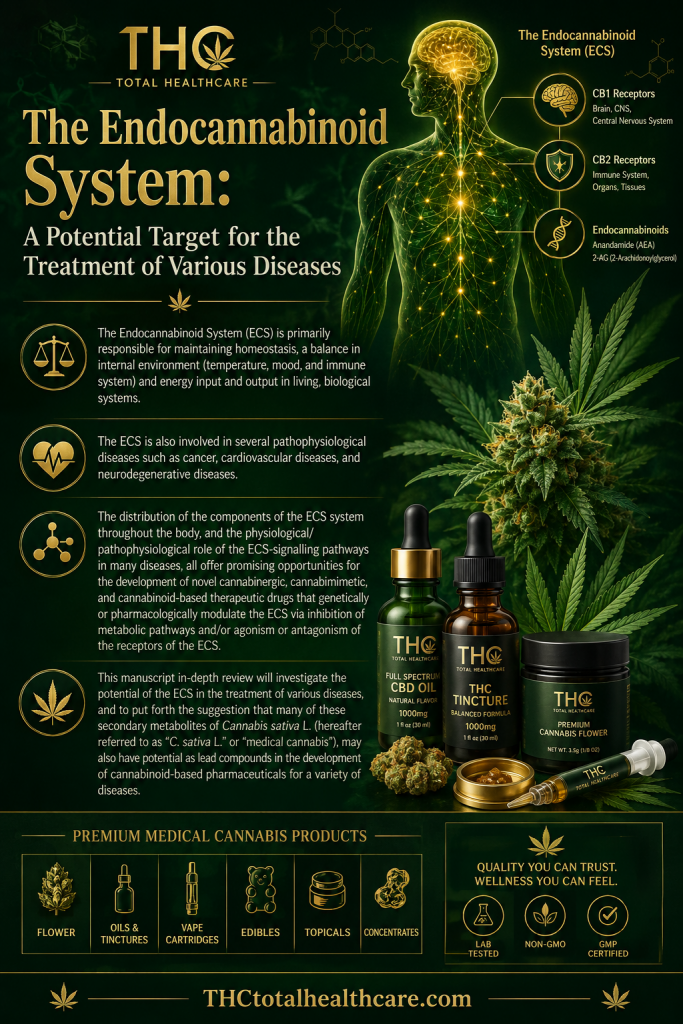
 “The Endocannabinoid System (ECS) is primarily responsible for maintaining homeostasis, a balance in internal environment (temperature, mood, and immune system) and energy input and output in living, biological systems.
 “Persistent inflammation occurs in people with HIV (PWH) and has many downstream adverse effects including myocardial infarction, neurocognitive impairment and death.