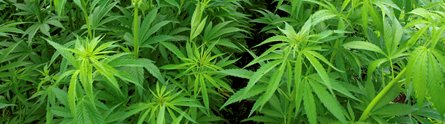
Evaluation of Phytocannabinoids from High Potency Cannabis sativa using In Vitro Bioassays to Determine Structure-Activity Relationships for Cannabinoid Receptor 1 and Cannabinoid Receptor 2.

“Cannabis has been around for thousands of years and has been used recreationally, medicinally, and for fiber.

Over 500 compounds have been isolated from Cannabis sativa with approximately 105 being cannabinoids. Of those 105 compounds, Δ9-tetrahydrocannabinol has been determined as the primary constituent, which is also responsible for the psychoactivity associated with Cannabis.

Cannabinoid receptors belong to the large superfamily of G protein-coupled receptors.

Targeting the cannabinoid receptors has the potential to treat a variety of conditions such as pain, neurodegeneration, appetite, immune function, anxiety, cancer, and others.

Developing in vitro bioassays to determine binding and functional activity of compounds has the ability to lead researchers to develop a safe and effective drug that may target the cannabinoid receptors…”

http://www.ncbi.nlm.nih.gov/pubmed/25419092

A systematic review of the antipsychotic properties of cannabidiol in humans.

“Despite extensive study over the past decades, available treatments for schizophrenia are only modestly effective and cause serious metabolic and neurological side effects. Therefore, there is an urgent need for novel therapeutic targets for the treatment of schizophrenia.

A highly promising new pharmacological target in the context of schizophrenia is the endocannabinoid system…

the non-psychotropic, plant-derived cannabinoid agent cannabidiol (CBD) may have antipsychotic properties, and thus may be a promising new agent in the treatment of schizophrenia.

Here we review studies that investigated the antipsychotic properties of CBD in human subjects.

Results show the ability of CBD to counteract psychotic symptoms and cognitive impairment associated with cannabis use as well as with acute THC administration.

In addition, CBD may lower the risk for developing psychosis that is related to cannabis use.

These effects are possibly mediated by opposite effects of CBD and THC on brain activity patterns in key regions implicated in the pathophysiology of schizophrenia, such as the striatum, hippocampus and prefrontal cortex.

The first small-scale clinical studies with CBD treatment of patients with psychotic symptoms further confirm the potential of CBD as an effective, safe and well-tolerated antipsychotic compound, although large randomised clinical trials will be needed before this novel therapy can be introduced into clinical practice.”

http://www.ncbi.nlm.nih.gov/pubmed/25667194

http://www.thctotalhealthcare.com/category/schizophrenia/

Protective effects of cannabidiol on lesion-induced intervertebral disc degeneration.

“Disc degeneration is a multifactorial process that involves hypoxia, inflammation, neoinnervation, accelerated catabolism, and reduction in water and glycosaminoglycan content…

Cannabidiol (CBD) is the major nonpsychotropic phytocannabinoid of Cannabis sativa (up to 40% of Cannabis extracts). Contrary to most cannabinoids, CBD does not produce psychotomimetic or cognitive effects. Interesting, in the last years it has been suggest that CBD produces a plethora of others pharmacological effects, including antioxidant, neuroprotective, anti-proliferative, anti-anxiety, hypnotic and antiepileptic, anti-nausea, anti-ischemic, anti-hyperalgesic, and anti-inflammatory…

The present study investigated the effects of cannabidiol intradiscal injection in the coccygeal intervertebral disc degeneration induced by the needle puncture model using magnetic resonance imaging (MRI) and histological analyses…

 Cannabidiol significantly attenuated the effects of disc injury induced by the needle puncture. Considering that cannabidiol presents an extremely safe profile and is currently being used clinically, these results suggest that this compound could be useful in the treatment of intervertebral disc degeneration.

 In summary our study revealed anti-degenerative effects of intradiscal microinjection of CBD 120 nmol. CBD represents one of the most promising candidates present in the Cannabis sativa plant for clinical use due to its remarkable lack of cognitive or psychotomimetic actions.”

http://www.ncbi.nlm.nih.gov/pmc/articles/PMC4269422/

http://www.thctotalhealthcare.com/category/spinal-cord-injury/

Neuroprotective Properties of Cannabigerol in Huntington’s Disease: Studies in R6/2 Mice and 3-Nitropropionate-lesioned Mice.

“Different plant-derived and synthetic cannabinoids have shown to be neuroprotective in experimental models of Huntington’s disease (HD) through cannabinoid receptor-dependent and/or independent mechanisms.

Herein, we studied the effects of cannabigerol (CBG), a nonpsychotropic phytocannabinoid, in 2 different in vivo models of HD.

CBG was extremely active as neuroprotectant in mice intoxicated with 3-nitropropionate (3NP), improving motor deficits and preserving striatal neurons against 3NP toxicity.

In addition, CBG attenuated the reactive microgliosis and the upregulation of proinflammatory markers induced by 3NP, and improved the levels of antioxidant defenses that were also significantly reduced by 3NP.

We also investigated the neuroprotective properties of CBG in R6/2 mice. Treatment with this phytocannabinoid produced a much lower, but significant, recovery in the deteriorated rotarod performance typical of R6/2 mice.

Using HD array analysis, we were able to identify a series of genes linked to this disease (e.g., symplekin, Sin3a, Rcor1, histone deacetylase 2, huntingtin-associated protein 1, δ subunit of the gamma-aminobutyric acid-A receptor (GABA-A), and hippocalcin), whose expression was altered in R6/2 mice but partially normalized by CBG treatment.

We also observed a modest improvement in the gene expression for brain-derived neurotrophic factor (BDNF), insulin-like growth factor-1 (IGF-1), and peroxisome proliferator-activated receptor-γ (PPARγ), which is altered in these mice, as well as a small, but significant, reduction in the aggregation of mutant huntingtin in the striatal parenchyma in CBG-treated animals.

In conclusion, our results open new research avenues for the use of CBG, alone or in combination with other phytocannabinoids or therapies, for the treatment of neurodegenerative diseases such as HD.”

http://www.ncbi.nlm.nih.gov/pubmed/25252936

http://www.thctotalhealthcare.com/category/huntingtons/

Cannabinoids as therapeutic agents in cancer: current status and future implications

Img8

“Cannabinoids… active compounds of the Cannabis sativa plant… cannabinoids are clinically used for anti-palliative effects, recent studies open a promising possibility as anti-cancer agents.

They have been shown to possess anti-proliferative and anti-angiogenic effects in vitro as well as in vivo in different cancer models…”  http://www.ncbi.nlm.nih.gov/pubmed/25115386

“Cannabinoids… the active compounds of the Cannabis sativa plant… anti-cancer agents… anti-proliferative… anti-angiogenic… anti-migratory and anti-invasive… The administration of single cannabinoids might produce limited relief compared to the administration of crude extract of plant containing multiple cannabinoids, terpenes and flavanoids.” Full-text: http://www.impactjournals.com/oncotarget/index.php?journal=oncotarget&page=article&op=view&path%5B0%5D=2233&path%5B1%5D=3664

http://www.thctotalhealthcare.com/category/cancer/

The non-psychotropic plant cannabinoids, cannabidivarin (CBDV) and cannabidiol (CBD), activate and desensitize transient receptor potential vanilloid 1 (TRPV1) channels in vitro: potential for the treatment of neuronal hyperexcitability.

“Epilepsy is the most common neurological disorder, with over 50 million people worldwide affected. Recent evidence suggests that the transient receptor potential cation channel subfamily V member 1 (TRPV1) may contribute to the onset and progression of some forms of epilepsy.

Since the two non-psychotropic cannabinoids cannabidivarin (CBDV) and cannabidiol (CBD) exert anticonvulsant activity in vivo and produce TRPV1-mediated intracellular calcium elevation in vitro, we evaluated the effects of these two compounds on TRPV1 channel activation and desensitization and in an in vitro model of epileptiform activity.

These data suggest that CBDV anti-epileptiform effects in the Mg2+-free model are not uniquely mediated via activation of TRPV1. However, TRPV1 was strongly phosphorylated (and hence likely sensitized) in Mg2+-free solution-treated hippocampal tissue, and both capsaicin and CBDV caused TRPV1 dephosphorylation, consistent with TRPV1 desensitization. We propose that CBDV effects on TRP channels should be studied further in different in vitro and in vivo models of epilepsy.”

http://www.ncbi.nlm.nih.gov/pubmed/25029033

Marijuana Compound CBD Can Effectively Treat Schizophrenia

Marijuana Plant

“Cannabidiol (CBD) is a known marijuana compound, and might just be better than antipsychotics at treating schizophrenia.

A preliminary trial has shown this form of treatment to have fewer side effects than traditional methods of treatment…

Since CBD comes from the marijuana plant, political issues are likely to compromise its availability. Extracting the compound from the plant is also expensive.

But the biggest issue scientists face is that CBD is a natural compound, and can’t be patented the way new drugs are. Pharmaceutical companies are therefore not likely to develop it.”

http://www.designntrend.com/articles/14675/20140529/marijuana-compound-cbd-effectively-treat-schizophrenia.htm

http://www.thctotalhealthcare.com/category/schizophrenia/

Common weed helps treat herpes, study finds

herpes

“Tansy, a flowering plant that has long been used as a folk remedy to treat fevers, rheumatism, and other conditions, may now have another known health benefit. According to a recent study published in the journal Phytotherapy Research, antiviral compounds naturally present in tansy show effectiveness in treating the herpes virus.”

http://www.naturalnews.com/031510_weed_herpes.html

Cannabinoids Can Limit Neurological Stroke Damage

“Chemical compounds found in cannabis may help to reduce brain damage following a stroke, new research has revealed.
Researchers at the University of Nottingham conducted a meta-analysis of experimental studies into cannabinoids; chemicals related to those found in cannabis, some of which also occur naturally in the body. The findings showed that the compounds could reduce the size of stroke and improve neurological function.
Cannabinoids can be classified into those found naturally in the body (endocannabinoids), those made artificially (synthetic cannabinoids) or those derived from extracts from the plant cannabis sativa (phytocannabinoids).
The research, announced at the annual UK Stroke Forum, indicates that all three classes of cannabinoid could be effective in shrinking the area of the brain affected by stroke and in recovering neurological function.”

Compounds in cannabis could limit stroke damage

A cannabis plant

“Chemical compounds found in cannabis may help to reduce brain damage following a stroke, new research has revealed.

 Researchers at the University of Nottingham conducted a meta-analysis of experimental studies into cannabinoids; chemicals related to those found in cannabis, some of which also occur naturally in the body. The findings showed that the compounds could reduce the size of stroke and improve neurological function.
Cannabinoids can be classified into those found naturally in the body (endocannabinoids), those made artificially (synthetic cannabinoids) or those derived from extracts from the plant cannabis sativa (phytocannabinoids).”